

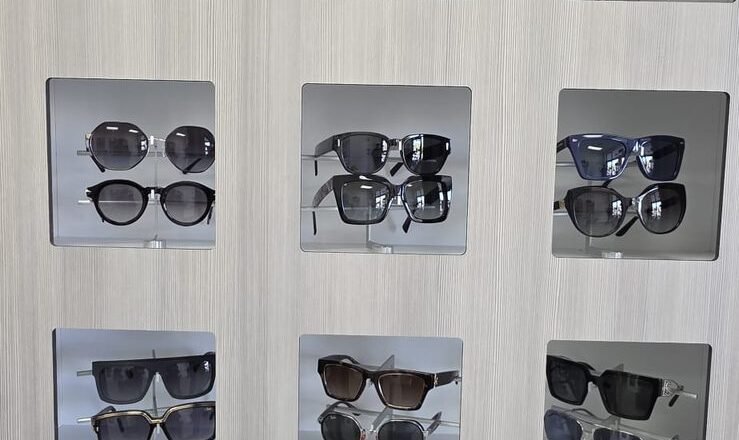
Sunglasses are about more than comfort on a bright day. Ultraviolet (UV) light can affect your eyes in every season, and not every pair of sunglasses protects you the same way.
Key takeaways
- Look for sunglasses labeled UV400 or 100% UV protection, which the FDA says block more than 99% of UVA and UVB.
- Dark lenses are not the same as UV protection, and higher prices do not guarantee it.
- Large wraparound frames can block light that enters from the sides.
- Children need real UV protection too; toy sunglasses may not have it.
What the label should say
The FDA advises choosing sunglasses with a UV400 rating or a label stating 100% UV protection. These block more than 99% of UVA and UVB radiation. The American Academy of Ophthalmology gives similar advice, noting the label may also say UV absorption up to 400 nm.
Dark does not mean protected
Lens color and darkness do not tell you how well a lens blocks UV light. Lighter tints can offer the same protection as very dark ones, which is why checking the label matters. If you are unsure, an eye care professional may be able to check a pair for you.
Polarized and light-adjusting lenses
According to the AAO, polarization does not by itself provide UV protection, though many polarized lenses are combined with a UV-blocking layer, so check the label. Photochromic (light-adjusting) lenses darken in sunlight, but it takes time for them to adjust to changing light. Learn the differences in our guide to prescription sunglasses.
Frames and coverage
Standard frames let UV light in around the edges. The FDA suggests considering large, wraparound-style frames, which may provide more UV protection because they cover the entire eye socket. Pairing sunglasses with a wide-brimmed hat adds protection.
Year-round habits
- Wear sunglasses on cloudy days and in winter, not only in summer.
- Keep a pair in the car and by the door.
- Replace scratched lenses.
- Ask about prescription sunglasses if you wear glasses.
- Help children develop the habit early.
Frequently asked questions
Do children need sunglasses?
The FDA says children should wear sunglasses that indicate the UV protection level, and that toy sunglasses may not have UV protection.
Do pricier sunglasses protect better?
The FDA says pricier sunglasses do not ensure greater UV protection. Check the label.
Visit Reel Optics in Old Bridge
If you would like help, our team in Old Bridge is here. You can book an eye exam or ask about prescription sunglasses at Reel Optics Vision Center, 2553 County Rd 516, Old Bridge, NJ 08857. Appointments are recommended for eye exams, and walk-ins are welcome when you are shopping for glasses. See hours and directions on our Old Bridge page, or send us a message.
Related reading
Sources and further reading
- U.S. Food and Drug Administration: Tips to stay safe in the sun, from sunscreen to sunglasses
- American Academy of Ophthalmology: Recommended types of sunglasses
- American Academy of Ophthalmology: Eyeglasses, how to choose glasses for vision correction
This article is general information, not medical advice and not a diagnosis. For questions about your own eyes, talk with your eye doctor.
