

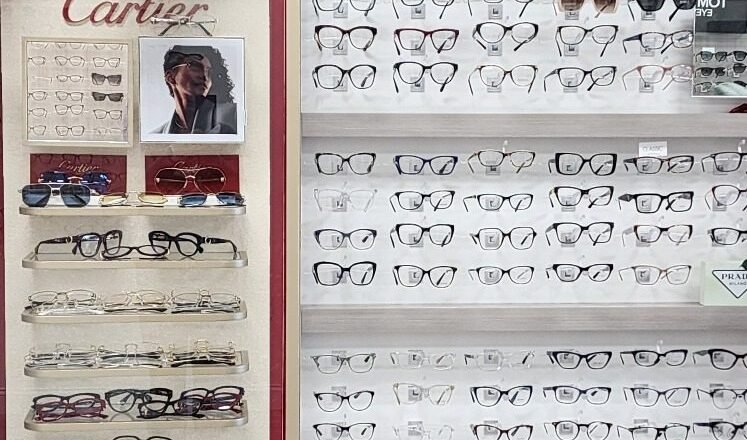
The best frames are the ones that fit comfortably, suit your prescription and make you feel good wearing them. Face shape can guide your style, but fit and function matter most.
Key takeaways
- Fit comes first: frames should be comfortable on your nose and ears and stay put.
- Face-shape advice is a starting point, not a rule. Try several shapes.
- Materials differ in weight, durability and allergy considerations.
- An optician can adjust frames to your face and match them to your lenses.
Start with fit
Frames should sit comfortably on your nose and ears without pinching, slipping or leaving marks. The eyes should be roughly centered in the lenses. An optician can adjust the bridge and temples so the frames sit properly. Read more in the Cleveland Clinic explanation of what an optician does.
Face shape as a style guide
Many people use face shape as a starting point. These are general ideas, not rules, so trust what looks and feels right in the mirror:
- Round faces: angular or rectangular frames can add definition.
- Square faces: round or oval frames can soften strong lines.
- Oval faces: most shapes work, so choose by style and fit.
- Heart-shaped faces: frames that are wider at the bottom or lightweight rimless frames can balance a wider forehead.
- Long faces: taller frames or frames with decorative temples can add width.
Frame materials
The American Academy of Ophthalmology describes common materials. A quick summary:
| Material | Good to know |
|---|---|
| Titanium | Very strong, lightweight and corrosion-resistant; hypoallergenic, a good choice for nickel allergies |
| Stainless steel | Lightweight, strong and affordable, though not as light as titanium |
| Flexible metals (Flexon) | Springs back after bending; described as great for active kids |
| Plastic (acetate/zyl) | Inexpensive and easy to adjust; can break more easily than metal |
| Blended nylon | Strong and lightweight; often used for sports and wraparound frames |
| Rimless | Lightweight; the AAO says to use Trivex or polycarbonate lenses |
Match frames to your lifestyle and prescription
- Strong prescriptions: smaller frames can reduce lens thickness. Ask about lens options.
- Progressive lenses: frames need enough height for the lens zones.
- Active days: look for flexible, impact-resistant materials.
- Screens and reading: comfort for long wear matters more than anything.
Do not judge by price alone
The AAO notes that spending more on frames does not mean you will get better-quality eyeglasses, and that quality lenses are worth the investment. See our frame showroom and the brands we carry.
Frequently asked questions
How do I know if frames fit properly?
They should feel secure without pressure points, not slide down when you look down, and your eyes should look centered in the lenses. Ask your optician to check the fit.
Can I try frames on before I buy?
Yes. Walk-ins are welcome when you are shopping for glasses at our Old Bridge showroom.
Visit Reel Optics in Old Bridge
If you would like help, our team in Old Bridge is here. You can book an eye exam or ask about frames at Reel Optics Vision Center, 2553 County Rd 516, Old Bridge, NJ 08857. Appointments are recommended for eye exams, and walk-ins are welcome when you are shopping for glasses. See hours and directions on our Old Bridge page, or send us a message.
Related reading
Sources and further reading
- American Academy of Ophthalmology: How to choose the glasses frame material that’s right for you
- American Academy of Ophthalmology: Eyeglasses, how to choose glasses for vision correction
- Cleveland Clinic: What is an optician?
- American Academy of Ophthalmology: Tips for choosing the right reading glasses
This article is general information, not medical advice and not a diagnosis. For questions about your own eyes, talk with your eye doctor.
