

If you can read the small print and have never worn glasses, an eye exam can feel unnecessary. But 20/20 describes how sharply you see at a distance. It does not tell you how healthy your eyes are.
Key takeaways
- 20/20 measures sharpness of distance vision only.
- The National Eye Institute (NEI) says many eye diseases have no symptoms or warning signs.
- A comprehensive exam also checks eye focusing, eye teaming, peripheral vision and the inside of the eye.
- Early detection gives your doctor more options, so regular exams matter even if you feel fine.
What 20/20 actually means
Visual acuity is measured by how small a letter you can read from a set distance. Seeing 20/20 means you read at 20 feet what a typical person reads at 20 feet. It is one measure of one skill. It does not capture how your eyes focus up close, how they work together, how wide your side vision is, or the condition of the retina and optic nerve.
Why symptoms are not a reliable alarm
The NEI explains that a dilated eye exam is how eye diseases can be found early, when they are easier to treat, and that since many eye diseases have no symptoms, you could have a problem and not know it. It lists diabetic retinopathy, glaucoma, age-related macular degeneration, cataracts and refractive errors among the conditions an exam can find.
What a comprehensive exam checks
According to the American Optometric Association, a comprehensive exam looks at your health history, visual clarity, eye focusing and coordination, peripheral vision, pupil response, and eye health. In short:
- How clearly you see, near and far
- How well your eyes focus, move and work as a team
- Your side (peripheral) vision
- The front and back of the eye, often with dilating drops
- Your overall eye health and signs of systemic conditions
Eyes change gradually
Your prescription can drift without you noticing, and people tend to adapt to small changes. Screens, age and health can all play a part. A routine exam also gives your doctor a record to compare against in the future.
How often should you go?
It depends on your age and risk factors. We cover typical schedules in How Often Should You Get an Eye Exam?.
Frequently asked questions
Is a vision screening the same as an eye exam?
No. A screening, such as one at school or the DMV, checks only basic vision. A comprehensive exam evaluates your eye health too.
What should I bring to my exam?
Bring your current glasses or contacts, a list of your medications and health conditions, your insurance card, and any questions.
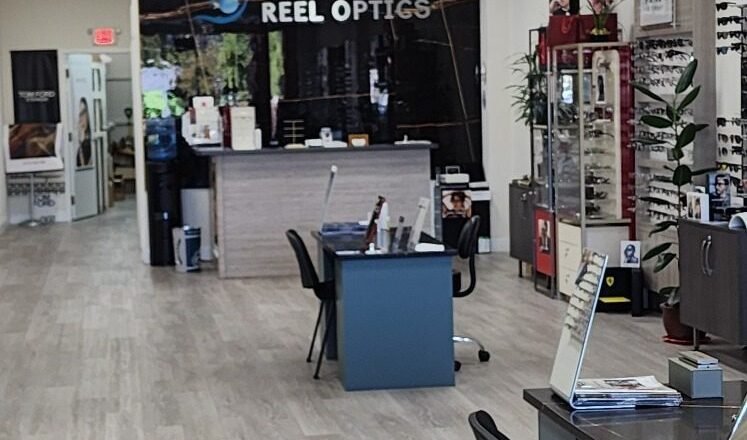
Visit Reel Optics in Old Bridge
If you would like help, our team in Old Bridge is here. You can book an eye exam or ask about eye exam at Reel Optics Vision Center, 2553 County Rd 516, Old Bridge, NJ 08857. Appointments are recommended for eye exams, and walk-ins are welcome when you are shopping for glasses. See hours and directions on our Old Bridge page, or send us a message.
Related reading
Sources and further reading
- National Eye Institute: Get a dilated eye exam
- American Optometric Association: Comprehensive eye exams
- American Optometric Association: 2023 adult eye exam guideline announcement
- National Eye Institute: Finding an eye doctor
This article is general information, not medical advice and not a diagnosis. For questions about your own eyes, talk with your eye doctor.
